

In traditional cabinet systems, especially deep cabinets, corner units, and tall storage spaces, there is a common and well-known limitation. While the physical cabinet volume exists, a significant portion of it is not efficiently used in daily life.
Items stored at the back are difficult to reach, corner areas often become dead zones, and upper shelves are rarely used effectively. Users frequently need to bend, stretch, or move items in front to access what they need. As a result, although the cabinet appears fully utilized from a design perspective, its actual functional efficiency is much lower.
This creates a gap between physical storage space and usable storage space, which has become a key challenge in modern kitchen design.
Rotating cabinet systems such as FurnSpin are not designed to increase physical storage capacity or expand cabinet volume. Instead, their core function is to improve accessibility and usability.
By introducing a rotating mechanism, deep storage areas and hidden corners can be brought into full view. Items that were previously difficult to reach become accessible with a simple rotation. Entire cabinet sections can be exposed and organized in a more intuitive way.
In other words, the system does not create additional space. It transforms existing space into a more functional and accessible structure, effectively improving storage efficiency rather than increasing volume.
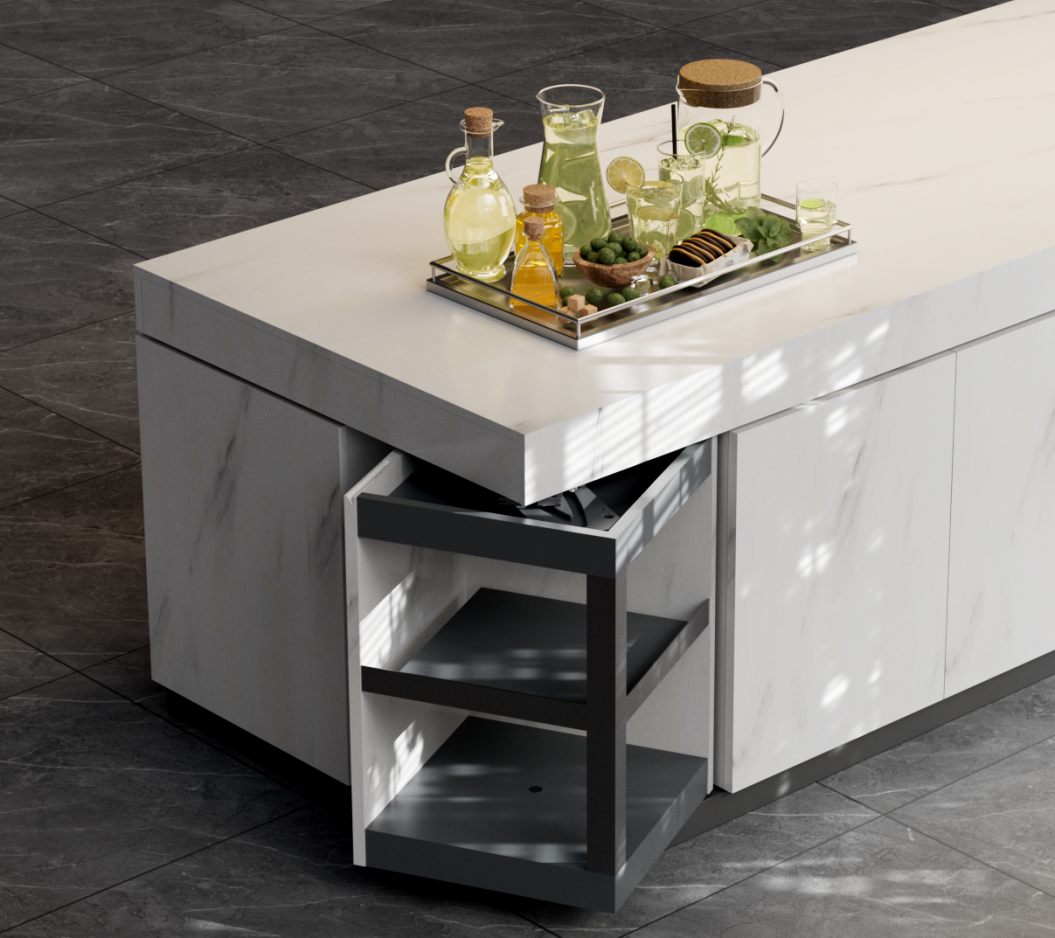
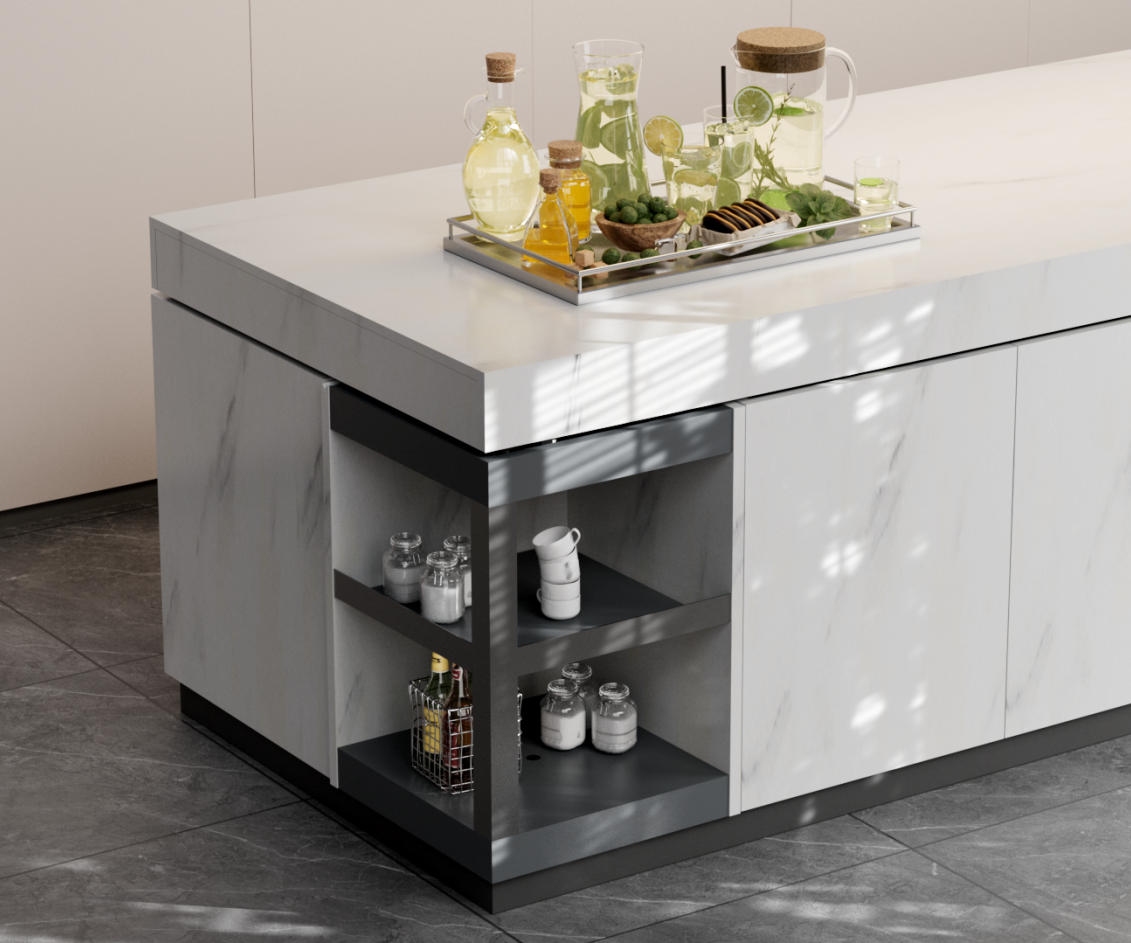
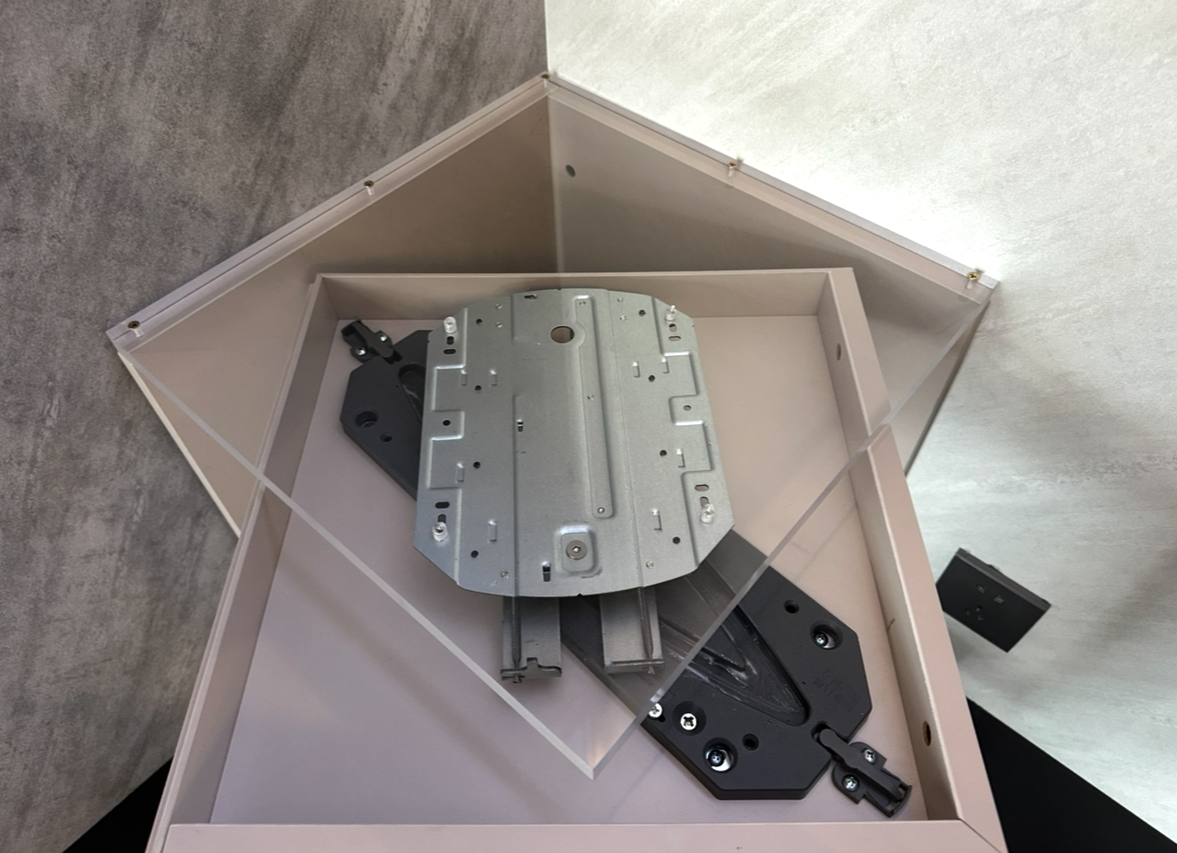
It is important to understand that rotating cabinet systems are not space-free mechanisms. During operation, they require a defined clearance area for rotation movement. In addition, the internal mechanical structure occupies part of the cabinet volume.
This means that from a strict engineering perspective, a rotating cabinet system does not reduce the overall footprint of a cabinet. In some cases, the net internal storage capacity may even be slightly reduced due to structural components.
However, unlike traditional storage solutions, this space usage is concentrated and controlled within a defined movement path, making it predictable and efficient in practical applications.
Compared to traditional hinged cabinet doors, which open outward in a wide arc, rotating cabinet systems operate within a more compact and controlled movement range.
Hinged doors often require significant swing space, which can interfere with kitchen walkways, islands, or adjacent cabinets. This can disrupt workflow and limit layout flexibility.
In contrast, rotating systems keep movement closer to the cabinet structure itself, reducing interference with surrounding space. This results in smoother access and improved kitchen workflow efficiency in real-world usage scenarios.
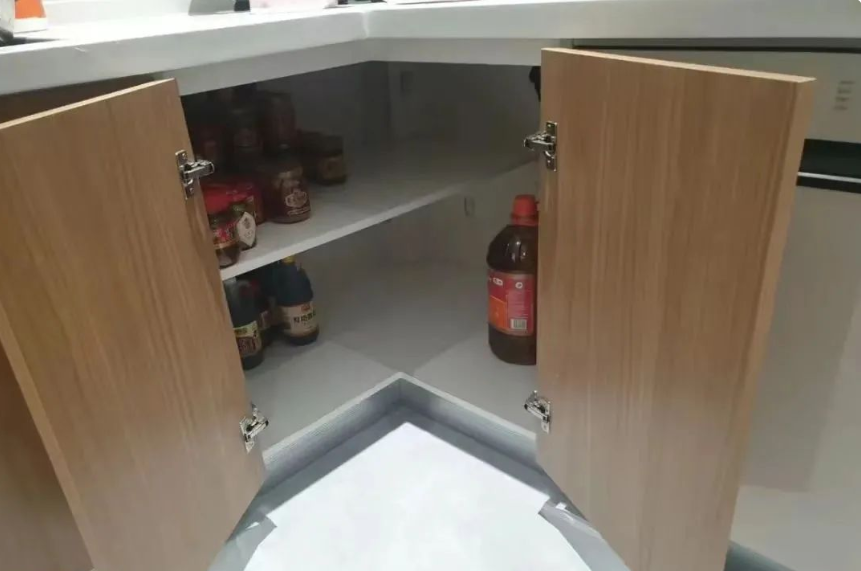
The term “space saving” is widely used because it reflects user perception rather than strict physical measurement.
In many traditional cabinet systems, only around 50% to 70% of available storage space is effectively utilized due to accessibility limitations. With rotating cabinet systems, accessibility is significantly improved, allowing approximately 80% to 95% of the storage space to become functionally usable.
This creates a strong perception that the storage space has increased, even though the actual physical dimensions remain unchanged. Therefore, the concept of “space saving” in this context is more accurately understood as space efficiency improvement.
At MKDFIRE, our 360° Rotating Cabinet System P118 is designed around the principle of improving usability rather than simply increasing storage capacity.
As a manufacturer specializing in functional hardware and modern storage solutions, we focus on enhancing accessibility, optimizing kitchen workflow efficiency, improving visibility of stored items, and delivering a better overall user experience.
Our goal is not just to help users store more items, but to ensure that every part of the cabinet can be easily accessed, organized, and used in daily life.
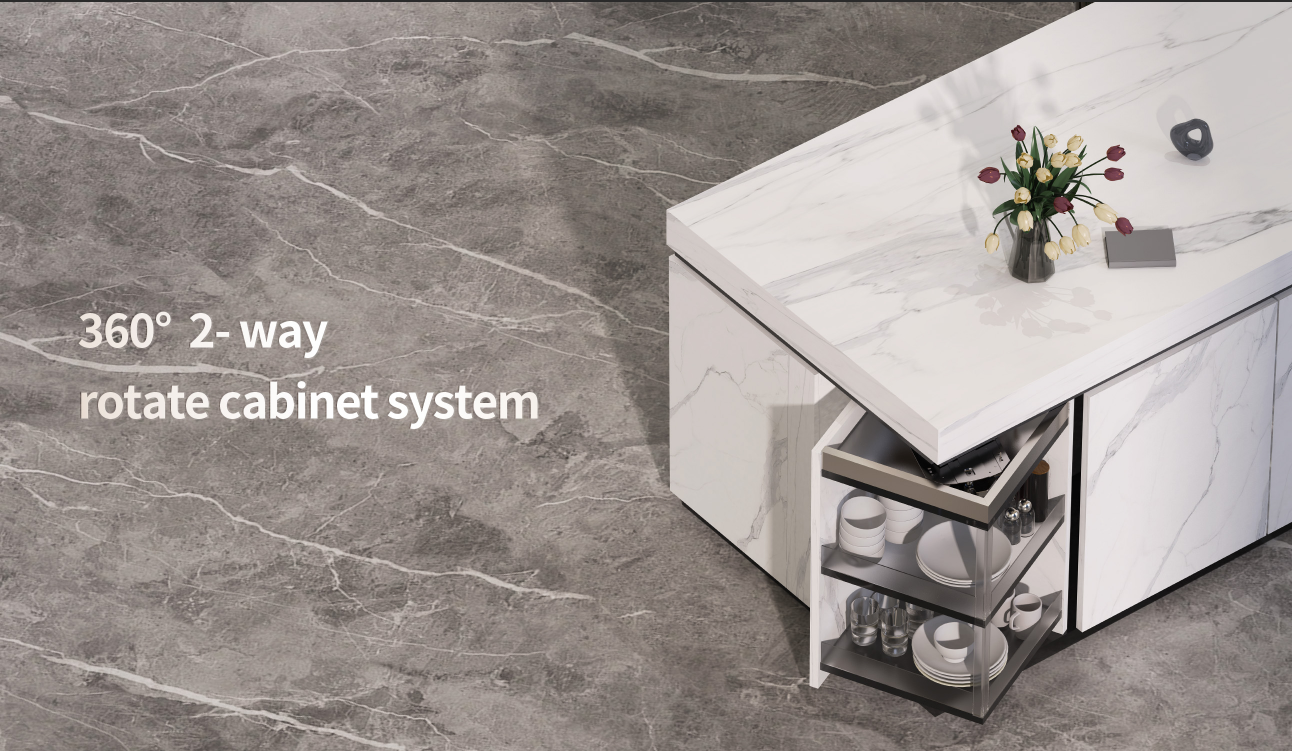
A 360° rotating cabinet system is not a technology that physically creates more space. Instead, it is a design innovation that changes how space is used and experienced.
The true value of rotating storage systems lies in improving accessibility, enhancing usability, and maximizing the efficiency of existing cabinet space.
Modern kitchen design is no longer focused solely on how much storage can be created. Instead, it is increasingly focused on how easily that storage can be accessed and used in everyday life.